Mini Cart

drinking water out of copper, copper water bottle, copper lined

Nyala,40oz,double walled stainless,copper lined,water bottle,customize

Our newest product is our Nyala. It is a 40oz copper lined water bottle. The exterior is a double walled stainless with a powder coated finish. It will will keep your beverage hot for 12 hours or cold for 24 hours.  The Nyala comes with a handy carry strap for hikers and walkers. Great for anyone looking for the health benefits of drinking out of copper.

https://www.thehealthsite.com/diseases-conditions/10-benefits-of-drinking-water-from-a-copper-vessel-p214/


Newt, 32oz, flip bottle, converts, changes to tumbler, tumbler

When I first saw our Newt at the trade show I thought it was really cool. We ordered a sample right away. Then it came. And I thought it was the silliest thing I had ever seen. Who would want a bottle that converts to other bottles? What I at first thought was a great idea now I was doubting.  So I gave the sample to my 14 year old son.

He took it to Boy Scout camp and was the star of the camp. Because of a water bottle. They thought it was the best water bottle they had ever seen. So I took back my sample (sorry Jack) and added it to my line.

Newt, 32oz, flip bottle, converts, changes to tumbler, tumbler

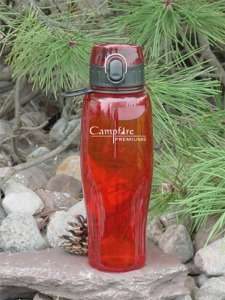
Our Newt is a 32 oz. bottle. It converts to a 14 oz. double wall tumbler. You just unscrew locking ring, flip the top over, screw ring back on and TADA! you have a 14 oz. tumbler.

newt-red

The PETG acrylic is shatter and impact resistant. Because it twists in half it is super easy to clean and put ice in. The way it converts from a bottle to a tumbler and back again allows it to do double duty. Put ice in the bottom before inserting the top and you have a great cooler to keep your drink cold. Great for scouts, campers, gift shops and camp stores. If you need a very unique item this is it.

newt-clear

Please follow all care instructions.

I know you think I am biased, but before buying another disposable water bottle, just hear me out. A reusable water bottle is better for the Earth, saves you money and is better for your overall health.

Reusable Saves You Money

Did you know that Americans spend about as much money on disposable plastic water bottles each year as they do on engagement rings? $11 billion dollars. That is a lot of money being thrown away. An estimated 25 percent or more of bottled water is really regular tap water, sometimes purified, sometimes not. So you are really buying your own tap water. I just read the label on our local Tops brand water- it says right on it that it comes from our Erie county water supply. In the United States, 24 percent of bottled water sold is either Pepsi’s Aquafina (13 percent of the market) or Coke’s Dasani (11 percent of the market). Both brands are bottled, purified municipal water. Put a filter on your faucet and it is exactly the same thing.  But free.

Sipping from a reusable bottle could save a whopping $550.00 a year (one disposable plastic water bottle daily at its average cost) compared to a one-time $10-$25 investment. One water pitcher filter can effectively replace as much as 300 standard 16.9-ounce bottles. So you can get great-tasting water without so much waste. Talk about refreshing. The average water pitcher filters 240 gallons of water a year for about 19 cents a day. Put in perspective, to get the same amount of water from bottled water would require 1,818 16.9-ounce water bottles a year – at an average cost of a dollar a bottle, that’s $4.98 a day. For about $10 each, you can purchase a reusable bottle, saving you hundreds of dollars a year on bottled water.The recommended eight glasses of water a day, at U.S. tap rates equals about $.49 per year; that same amount of bottled water is about $1,400.

Falcon 25oz tritan water bottle. Customize logo

Safety

If you think it is safer to drink from disposable water bottles still, maybe because you think that they are filtered more, think again. In the U.S., public water is regulated by the Environmental Protection Agency (EPA), which requires multiple daily tests for bacteria and makes results available to the public. The Food and Drug Administration, which regulates bottled water, only requires weekly testing and does not share its findings with the EPA or the public. Even under the more lax standards of the FDA, bottled water companies do not always comply with standardized contaminant levels. Alarmingly, the 1999 NRDC study found that 18 of the 103 bottled water brands tested contained, in at least one sample, “more bacteria than allowed under microbiological-purity guidelines.” Also, about one fifth of the brands tested positive for the presence of synthetic chemicals, such as industrial chemicals and chemicals used in manufacturing plastic like phthalate, a harmful chemical that leaches into bottled water from its plastic container. Bottled water companies, because they are not under the same accountability standards as municipal water systems, may provide a significantly lower quality of water than the water one typically receives from the tap.  Tap water in this country, with rare exceptions, is impressively safe. It is monitored constantly, and the test results made public. You can control your home filter yourself. Replace it as recommended and it will do as good if not better than you are buying in disposable containers.

Recycling vs Reuse

We pitch into landfills 38 billion water bottles a year (in excess of $1 billion worth of plastic). They should get recycled, but many people choose to throw them away instead. Americans went through about 50 billion plastic water bottles last year, which means each person in America used about 167 of them, but only recycled 38 of them. Durable, lightweight containers are manufactured just to be discarded. Disposable water bottles are made of totally recyclable polyethylene terephthalate (PET) so they can be 100% recycled yet our recycling rate for PET is only 23%.  Clearly this is a problem.

And if you are reusing your disposable water bottle instead of recycling it, eww. They are not meant for that. They are disposable. The mouths are not wide enough for you to clean properly. Harmful bacteria can accumulate inside as well as on the rim.

“In a 2002 study… researchers from the University of Calgary took 76 samples of water from water bottles of elementary school students; some of the bottles were reused for months on end without being washed.

They found that nearly two-thirds of the samples had bacterial levels that exceeded that of drinking water guidelines, which may have been the result of ‘the effect of bacterial regrowth in bottles that have remained at room temperature for an extended period,’ researchers wrote in the study…

“[T]he most likely source of enteric bacteria found in the students’ water bottles is the hands of the students themselves… Inadequate and improper hand washing after students have used the bathroom facilities could result in fecal coli forms in the classroom area.”

As soon as you drink from your water bottle, it is contaminated.  You need to be able to clean it correctly. Our care and use instructions will help you keep your reusable bottles clean and healthy.

Tritan properties definition

Energy Savings

Reusable water bottles save fossil fuels. If you fill one disposable plastic bottle a quarter of the way up with oil, it’s the amount needed to make it. A family of four switching to reusable bottles would save 27 gallons of oil a year. Making bottles to meet America’s demand for bottled water uses more than 17 million barrels of oil annually, enough to fuel 1.3 million cars for a year. And that’s not even including the oil used for transportation. Just one person switching to a reusable water bottle keeps 2,580 balloons of CO2 out of the air per year.  By switching to reusable, you’ll feel better about your commitment to the Earth. The energy we waste using bottled water would be enough to power 190,000 homes.

Reusable is Prettier

Reusable water bottles just plain look better. You can give them as gifts or incentives. Put your logo on them for product promotions. Hand them out at marathons and trade shows. Almost every gift shop, bookstore and souvenir shop in the world has reusable water bottles for sale. You should be carrying your water bottle with you wherever you go. Shouldn’t it be used to promote your brand? Get your logo out in the hands of all your customers. They will want to reuse your water bottle when it looks good. And can keep them healthier.


sparrow with logo

Resources:

The Proper Care and Use of Our Drinkware

Our drinkware is good quality and by taking care of them, you can expect years of dependable service. Please follow our care and use instructions to get the most out of your new product.

Bobcat 32oz Tritan Water Bottle $4.49-$3.49
Bobcat 32oz
Tritan Water Bottle
$4.49-$3.49
Do NOT Put in the Dishwasher

In general, we do not recommend you put any of our drinkware in the dishwasher. Yes some of our manufacturers say it is ok. Yes some of our competitors say it is safe to do so. We do not recommend it for several reasons. First, the acrylic/plastic products are not meant to be super heated. When you put them in the dishwasher the heat can melt some of the thinner plastics. The thicker ones you will not see an immediate impact. However, the high heat will take it’s toll on your product. Over time the plastic/acrylic will start to break down. And it breaks down into whatever you are drinking. If you wash it by hand the acrylic/plastic will keep its integrity and safety. Second, the rubber gaskets that seal the lids of your drinkware will break down fairly quickly. They crack under the high heat of the dishwasher and will start to leak. Third, the glue that holds your drinkware together- whether acrylic/plastic or stainless will break down under the high heat of the dishwasher. Then your liners start to slide- sometimes even coming out. Lastly, abrasive soaps in dishwashers can scratch the surface of both your stainless steel and acrylic/plastic. The process we use to put your logo onto your drinkware should withstand this- but what good does it do if the drinkware no longer works?

We recommend hand washing for the best result. Simply wash your bottle with warm soapy water. First pour out any leftover liquid, then add a few drops of dishwashing soap and some warm water, screw on the top, and shake for a few minutes. I suggest you use a bottle brush like a baby bottle cleaner so you can scrub deep inside your bottle, especially if it has a narrow mouth. Thoroughly clean the cap and straw as well and allow to air-dry overnight. Make sure you clean under any rubber gaskets as well. Most come off easily to allow you to clean them thoroughly as well as clean under them. I use a small baby bottle brush to clean mine. Scrub away coffee stains with a nonabrasive scrubbing pad. If you have a tough stain, sprinkle baking soda on the pad and then scrub. If you have a stain that is stubborn, rinse out the mug, fill it with distilled white vinegar, set it aside to soak overnight and try scrubbing again.
If you clean your drinkware daily this should keep it clean.

grizzly

Let’s say you forget your water bottle/travel mug in the car for a few days and find a smelly surprise. For stainless you can try this: Pour 2 tablespoons of baking soda into the mug, then add a generous amount of whatever vinegar you have on hand. The mixture bubbles up as you add the vinegar to the baking soda, so leave enough room in the mug to allow for shaking. Seal the mug tightly with the lid so the vinegar and baking soda don’t leak out. Shake the mug well at least a few times to get the inside surface and bottom of the lid clean. Scrub the mug with a soft bottle brush to break-up any grime left behind by coffee, if necessary. Don’t forget to clean under and around the rubber seal if it has one. Open the stainless steel mug, and rinse it thoroughly with warm water to remove the baking soda and vinegar. Once the mug is clean, let it air dry in a well-ventilated area on a drying rack or clean towel.

For our plastic and acrylic drinkware you can use vinegar. This all-natural cleaner is great for killing certain germs and bacteria, but it isn’t effective at killing everything such as the flu virus. After washing with soapy water, rinse well, and fill your bottle about one fifth of the way with white vinegar. Fill the rest with water, let it stand overnight, and in the morning thoroughly rinse it out using the above method with soapy water. Unless you like the taste of vinegar in your water…

If that doesn’t work you can use water bottle cleansing tablets: Many companies make this type of product, including Camelbak ($12 for eight), or you can also get away with using effervescent denture cleaning tablets such as Efferdent. Just fill your bottle with water, drop the tablet in, and allow to dissolve and sit for 15 to 30 minutes (depending on the product’s directions). Then rinse and enjoy your clean bottle.

DO NOT MICROWAVE ANY OF OUR PRODUCTS!!!

If putting in the dishwasher because plastics/acrylics should not be super heated then putting them in the microwave is an even worse idea. Again, the thinner walls will melt or lose their shape. The thicker ones will start to break down and lose their integrity. They will begin to crack and will break more easily. And obviously you cannot put stainless steel into the microwave because it is metal. You will catch your microwave on fire. If you need to reheat whateve you have put into your drinkware, first pour it into a microwave safe container, then heat it and put it back into your drinkware. Our travel mugs keep your drink warm for hours- so hopefully you find time to drink it in that time frame anyway. To get the maximum efficiency from our travel mugs preheat them. Heat water as hot as you can get it then pour it into your travel mug. Put the lid on and wait a minute or two. Then dump out the hot water and put your hot beverage into the travel mug.

You can do the same with your water bottles. Prechill them with cold water, then add your beverage. Do not put our drinkware into the freezer unless instructed to do so. Especially with liquid in them. The liquid will expand and crack your drinkware. For our freezer items, put them in the freezer upside down. This just prevents them from absorbing the smells of your freezer. Do not freeze the lids or straws of any of our items.

penguin-Pink

Do not drop your drinkware. It will withstand a drop or two from a reasonable distance (say your desk?) But probably not from the roof of your car. You can crack the seams, dent stainless rims or cause the liners to pop out. Our Tritan water bottles can take a bit more beating. It is impact and shatter resistant and great for hikers, campers and teams. I still would try not to drop it off a cliff or anything.

Do not overtighten the lids. Hand tight is good. Overtightening can cause the plastic in the lid to crack compromising your seal. Chewing on the lids will do the same thing.

With The Proper Care and Use of Our Drinkware you can ensure they last for years. With your brand and logo on them we want to make sure your customers, employees and team stay happy and satisfied.